


 English
 Spanish
 French
 German
 Italian
 Chinese (Simplified)
 Japanese
 Korean
 Arabic
 Portuguese
 08045803711
 08045803711
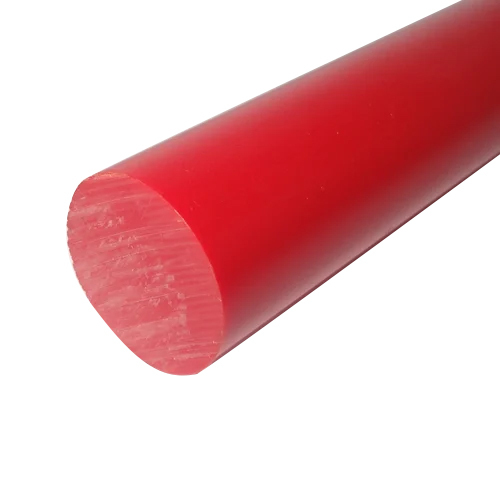
Poly Vinyl Chloride Rod
170 INR/Kilograms
Product Details:
- Type Poly Vinyl Chloride Rod
- Material Poly Vinyl Chloride
- Size Customize
- Color Red
- Weight Varies as per size
- Thickness Custom thickness available
- Dimensional Accuracy 0.1 mm
- Click to View more
X
Poly Vinyl Chloride Rod Price And Quantity
- 170 INR/Kilograms
- 100 Kilograms
Poly Vinyl Chloride Rod Product Specifications
- Poly Vinyl Chloride
- Yes
- Length up to 1000 mm
- 0.1 mm
- Red
- Custom thickness available
- Varies as per size
- Customize
- Poly Vinyl Chloride Rod
- High resistance to acids, alkalis & most chemicals
- Approximately 1.38 g/cm3
- Self-extinguishing
- -15C to +60C
- Excellent
- Shore D 80
- Smooth
- <0.1%
- 43 MPa
Poly Vinyl Chloride Rod Trade Information
- 1000 Kilograms Per Day
- 3 Days
Product Description
Polyvinyl chloride - quite possibly of the most widely recognized plastic on the planet. The wide utilization of PVC poles in designing got is the development of tanks and contraptions because of their magnificent protection from synthetics and water.Superior Chemical and Electrical Properties
Engineered with high chemical resistance to acids, alkalis, and most chemicals, the PVC rod is designed for environments where exposure to harsh substances is a concern. Its excellent electrical insulation ensures safety and efficiency in electrical applications, making it a preferred material for fabricating insulators, spacers, and various machine components.
Customizable for Diverse Applications
Available in custom lengths (up to 1000 mm), thicknesses, and colors, the PVC rod caters to different industry needs. With precise dimensional accuracy of 0.1 mm and a smooth surface finish, users can rely on a product tailored for optimal performance in applications that require reliability, longevity, and consistent quality.
FAQ's of Poly Vinyl Chloride Rod:
Q: How is the Poly Vinyl Chloride Rod beneficial for industrial use?
A: The PVC rod provides high mechanical strength, chemical resistance, and excellent electrical insulation. Its self-extinguishing property and UV resistance ensure durability and safety in harsh chemical, outdoor, and electrical environments.Q: What is the main process for customizing the size and thickness of the PVC rod?
A: Customers can specify their required dimensions during the ordering process. The manufacturer then produces the rods to the requested length, thickness, and color, ensuring dimensional accuracy up to 0.1 mm for each custom order.Q: When should the PVC rod be used over other plastics?
A: This PVC rod is ideal when high chemical resistance, electrical insulation, and flame retardancy are critical, such as in electrical panel construction, chemical processing equipment, and outdoor structural components.Q: Where are PVC rods commonly applied?
A: PVC rods are widely used in manufacturing electrical components, fabrication of machine parts, chemical tanks, spacers, and outdoor applications due to their resistance to chemicals, flames, and UV exposure.Q: What is the water absorption rate of the PVC rod and why does it matter?
A: The rod has a water absorption rate of less than 0.1%, which is crucial to prevent swelling, dimensional changes, or loss of insulation properties, especially in moist or humid environments.Q: How does the rod perform under different temperatures?
A: The PVC rod operates reliably in temperatures ranging from -15C to +60C, maintaining its structural integrity and insulation properties throughout this working range.Tell us about your requirement

Price:
Quantity
Select Unit
- 50
- 100
- 200
- 250
- 500
- 1000+
Additional detail
Mobile number
Email

Other Products in 'Poly Vinyl Chloride' category


Contact Details

- 64/66, Nagdevi Street, 1st Floor, Room No 102,Mumbai - 400003, Maharashtra, India
- Phone : 08045803711
APEX POLYMERS
Maharashtra
Maharashtra

- Mr. Kirti Sheth (Partnership)
- Mobile : 08045803711
- Send Inquiry
 Send Inquiry
 Send Inquiry
 Send SMS
 Call Me Free
APEX POLYMERS
All Rights Reserved.(Terms of Use)
Developed and Managed by Infocom Network Private Limited.
Developed and Managed by Infocom Network Private Limited.

