


 English
 Spanish
 French
 German
 Italian
 Chinese (Simplified)
 Japanese
 Korean
 Arabic
 Portuguese
 08045803711
 08045803711
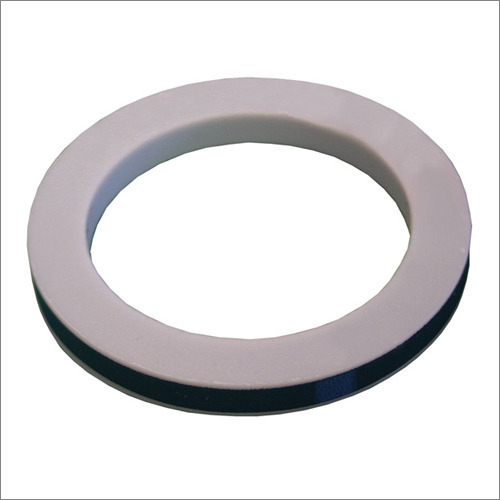
PTFE Envelope Gasket
25 INR/Piece
Product Details:
- Product Type PTFE Envelope Gasket
- Plastic Type PTFE (Polytetrafluoroethylene)
- Plastic Molding Type Compression Molding
- Thickness 1 mm to 10 mm
- Density 2.3 Gram per cubic centimeter(g/cm3)
- Strength High tensile and compressive strength
- Shape Ring / Circular / Custom Shapes
- Click to View more
X
PTFE Envelope Gasket Price And Quantity
- 25 INR/Piece
- 100 Piece
PTFE Envelope Gasket Product Specifications
- PTFE Envelope Gasket
- PTFE (Polytetrafluoroethylene)
- Ring / Circular / Custom Shapes
- Compression Molding
- 1 mm to 10 mm
- High tensile and compressive strength
- 2.3 Gram per cubic centimeter(g/cm3)
- Up to 100 bar
- Smooth
- 55-65 Shore D
- Excellent
- Industrial Sealing, Flange Protection
- Rubber, Non-Asbestos, or Metal Insert
- Virgin PTFE
- White
- -200C to +260C
PTFE Envelope Gasket Trade Information
- 10000 Piece Per Week
- 3-7 Days
Product Description
PTFE Envelope Gasket
These gaskets are successfully used in chemical plants, glass lined equipment due to their high temperature, corrosion and ageing resistance. Envelope Gaskets are produced in two forms : - Milled and Slit forms. Milled type envelope is perhaps the better of the two since it is made it fit the insert and present a flat face to the flange. The slit type is perfectly arrogated for many applications where cost is a major consideration. The envelope in this variety does not present a full face to the flange. Solid gaskets can be made to order in different types of shapes and sizes.
| TYPES | SIZE (mm) | THICKNESS (mm) |
| ENVELOPE | 12 mm Onwards | 0.5 mm Flap Thickness |
| SOLID GASKET | 12 mm Onwards | 1mm,2mm & 3mm |
Unmatched Chemical and Temperature Resistance
PTFE Envelope Gaskets provide superior resistance to a wide spectrum of aggressive chemicals and extreme temperatures ranging from -200C to +260C. This capability makes them the preferred choice for industries that demand both high performance and safety, ensuring reliable sealing in even the most challenging environments.
Versatile Design and Material Options
These gaskets are available with inner materials such as rubber, non-asbestos, or metal to fit diverse application requirements. The virgin PTFE outer layer ensures non-contamination and excellent durability. They can be supplied in standard ring, circular, or custom shapes, and with various thicknesses to suit specific flange and sealing needs.
Industrial Applications and Performance
Designed for industrial sealing and flange protection, PTFE Envelope Gaskets exhibit a high hardness of 55-65 Shore D and pressure resistance up to 100 bar. Their smooth finish and high-density structure offer a reliable seal, even under strenuous operating conditions, making them suitable for exporters, manufacturers, and suppliers across various industries.
FAQ's of PTFE Envelope Gasket:
Q: How does a PTFE Envelope Gasket protect industrial flanges?
A: A PTFE Envelope Gasket provides an effective barrier between the flange and process media, preventing leaks and chemical corrosion. Its virgin PTFE outer layer offers superior resistance to aggressive chemicals, ensuring long-lasting flange protection even in demanding situations.Q: What are the main benefits of using this gasket in industrial applications?
A: The primary benefits include exceptional chemical resistance, high and low temperature tolerance (-200C to +260C), and reliable pressure sealing up to 100 bar. Its high tensile and compressive strength, combined with a non-contaminating PTFE surface, ensures durability and performance across various industrial settings.Q: When should I choose a PTFE Envelope Gasket with a rubber, non-asbestos, or metal insert?
A: Selection depends on operating conditions. Choose rubber inserts for flexibility and sealing on irregular surfaces, non-asbestos for thermal stability, and metal for enhanced mechanical strength or high-pressure applications. Each offers unique advantages tailored to industrial requirements.Q: Where can PTFE Envelope Gaskets be used?
A: These gaskets are used in industries such as chemical processing, petrochemicals, pharmaceuticals, food and beverage, and other sectors that require robust chemical resistance and reliable flange sealing. They are suitable for both export and domestic industrial environments.Q: What is the typical process for manufacturing PTFE Envelope Gaskets?
A: PTFE Envelope Gaskets are typically produced via compression molding, where a virgin PTFE envelope is formed around an inner core of rubber, non-asbestos, or metal. This process ensures consistent thickness, smooth surface finish, and precise dimensions.Q: How does the gasket's design ensure an effective seal under high pressure?
A: The combination of a high-density PTFE envelope and a strong core material, along with a hardness rating of 55-65 Shore D, enables the gasket to withstand pressures up to 100 bar. This design minimizes deformation and maintains an effective seal even under fluctuating load or temperature conditions.Tell us about your requirement

Price:
Quantity
Select Unit
- 50
- 100
- 200
- 250
- 500
- 1000+
Additional detail
Mobile number
Email

Other Products in 'PTFE (Poly Tetra Fluoro Ethylene)' category



Contact Details

- 64/66, Nagdevi Street, 1st Floor, Room No 102,Mumbai - 400003, Maharashtra, India
- Phone : 08045803711
APEX POLYMERS
Maharashtra
Maharashtra

- Mr. Kirti Sheth (Partnership)
- Mobile : 08045803711
- Send Inquiry
 Send Inquiry
 Send Inquiry
 Send SMS
 Call Me Free
APEX POLYMERS
All Rights Reserved.(Terms of Use)
Developed and Managed by Infocom Network Private Limited.
Developed and Managed by Infocom Network Private Limited.

