


 English
 Spanish
 French
 German
 Italian
 Chinese (Simplified)
 Japanese
 Korean
 Arabic
 Portuguese
 08045803711
 08045803711

PTFE Tubes
135 INR/Piece
Product Details:
- Product Type PTFE Tube
- Plastic Type Polytetrafluoroethylene (PTFE)
- Plastic Molding Type Extruded
- Thickness As per requirement (commonly 0.5 mm to 5 mm)
- Density 2.20 Gram per cubic centimeter(g/cm3)
- Strength High Tensile Strength
- Shape Round Tube
- Click to View more
X
PTFE Tubes Price And Quantity
- 135 INR/Piece
- 50 Piece
PTFE Tubes Product Specifications
- High Tensile Strength
- As per requirement (commonly 0.5 mm to 5 mm)
- PTFE Tube
- Round Tube
- Polytetrafluoroethylene (PTFE)
- Extruded
- 2.20 Gram per cubic centimeter(g/cm3)
- 0.5 mm to 100 mm
- White/Translucent
- Smooth
- Up to +260C
- Excellent Dielectric Properties
- 2 mm to 120 mm
- Excellent; resistant to most chemicals and solvents
- Chemical delivery, Laboratory, Electrical insulation, Medical equipment, Food processing
- Flexible and Non-stick
PTFE Tubes Trade Information
- 10000 Piece Per Week
- 3-7 Days
Product Description
PTFE Tubes
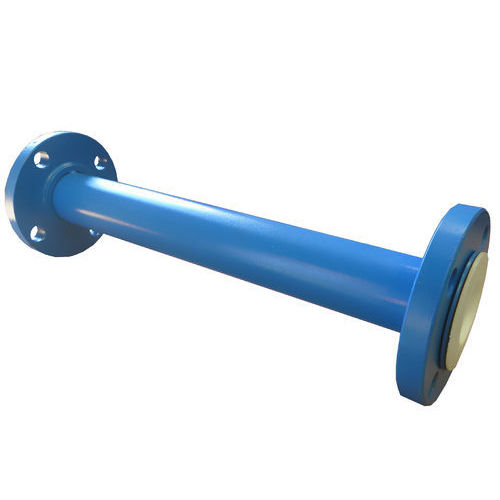
Reckoned for high performance, fine finish and simple installation, these PTFE Tubes have superior chemical resistivity and low coefficient of friction. To enhance efficiency of our offered range, updated technology and high-grade iron & steel are used in fabrication. These tubes find application in electronics, aerospace, air sampling, water processing systems, components and insulators. Additionally, PTFE Tubes are utilized in gas heat exchangers for cleaning gas from waste incinerators.
There are three types of PTFE pipes : For a pipe with outside diameter 1 - 25mm and thickness of wall 0..1 - 2.5mm, we choose polymized PTFE resin and process it by pressing; For a pipe with outside diameter 25 - 200mm and thickness of wall 1.5 - 8mm, we choose suspended PTFE resin and process it by extruding; For a pipe with outside diameter 25 _ 1200mm and thickness of wall 5 - 500mm, we process it by die pressing.
| OUTSIDE DIAMETER (mm) | OUTSIDE DIAMETER (mm) | WALL THICKNESS (mm) | LENGTH (mtrs) |
| PTFE Tubes | 3.2-28 | 0.8-1.5 | 50-500 |
| 25-100 | 3-25 | 1000-3000 | |
| Moulded Bush | 25-300 | 12-100 | 50-500 |
Superior Chemical and Temperature Resistance
PTFE tubes are engineered to withstand harsh chemical environments and extreme temperatures up to +260C. Their high resistance to solvents and chemicals ensures reliable performance in demanding applications, minimizing the risk of degradation or failure. This makes them a preferred solution for industries requiring robust and long-lasting tubing.
Flexible, Non-Stick Surface for Versatile Applications
The inherent flexibility and remarkably smooth, non-stick surface of PTFE tubes allow for easy installation and smooth material transfer. These features are especially advantageous in laboratory, medical, and food processing setups, where cleanliness and efficient flow are critical. Their versatility enables seamless integration across a wide range of systems.
FAQ's of PTFE Tubes:
Q: How are PTFE tubes manufactured and what benefits does extruded molding offer?
A: PTFE tubes are produced using an extrusion process that involves forcing molten PTFE material through a die to achieve the required diameter and thickness. This method results in smooth, uniform tubes with high tensile strength and consistent wall thickness, enhancing both durability and reliability in various industrial applications.Q: What are the typical usage scenarios for PTFE tubes?
A: PTFE tubes are commonly used for chemical delivery systems, laboratory apparatus, electrical insulation, medical equipment, and food processing lines. Their excellent chemical inertness and high temperature resistance make them especially suitable for environments where exposure to aggressive chemicals or heat is prevalent.Q: When should you choose PTFE tubes over other types of plastic tubing?
A: PTFE tubes should be selected when application conditions require outstanding chemical resistance, superior electrical insulation, smooth surfaces, and a broad temperature tolerance. They are the preferred choice when reliability and long-term performance in harsh or sterile settings is essential.Q: Where are these PTFE tubes exported and supplied from?
A: These PTFE tubes are manufactured, supplied, and exported from India. The suppliers cater to clients both domestically and internationally, meeting diverse industry needs with customized tube sizes and lengths.Q: What is the process for customizing PTFE tube dimensions for specific projects?
A: Clients can specify their required inner and outer diameters, tube length, and wall thickness within the available ranges when placing orders. The manufacturer then tailors the extruded PTFE tubes to precise specifications, ensuring the tubes fit the intended application perfectly.Q: How does the smooth, non-stick surface of PTFE tubes benefit practical applications?
A: The smooth and non-stick surface of PTFE tubes ensures low friction and prevents material buildup or contamination within the tube. This property is especially beneficial for food, medical, and chemical handling, where maintaining purity and efficient flow is important.Tell us about your requirement

Price:
Quantity
Select Unit
- 50
- 100
- 200
- 250
- 500
- 1000+
Additional detail
Mobile number
Email

Other Products in 'PTFE (Poly Tetra Fluoro Ethylene)' category


Contact Details

- 64/66, Nagdevi Street, 1st Floor, Room No 102,Mumbai - 400003, Maharashtra, India
- Phone : 08045803711
APEX POLYMERS
Maharashtra
Maharashtra

- Mr. Kirti Sheth (Partnership)
- Mobile : 08045803711
- Send Inquiry
 Send Inquiry
 Send Inquiry
 Send SMS
 Call Me Free
APEX POLYMERS
All Rights Reserved.(Terms of Use)
Developed and Managed by Infocom Network Private Limited.
Developed and Managed by Infocom Network Private Limited.

