


 English
 Spanish
 French
 German
 Italian
 Chinese (Simplified)
 Japanese
 Korean
 Arabic
 Portuguese
 08045803711
 08045803711
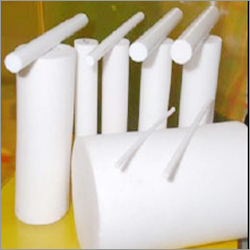
PTFE Rods
750 INR/
Product Details:
- Product Type PTFE Rods
- Plastic Type Polytetrafluoroethylene (PTFE)
- Plastic Molding Type Extruded and Molded
- Thickness 3 mm to 150 mm
- Density 2.3 Gram per cubic centimeter(g/cm3)
- Strength Tensile Strength: 21 - 28 MPa
- Shape Rod
- Click to View more
X
PTFE Rods Price And Quantity
- 10
- 750 INR/
PTFE Rods Product Specifications
- Rod
- Extruded and Molded
- Polytetrafluoroethylene (PTFE)
- 2.3 Gram per cubic centimeter(g/cm3)
- Tensile Strength: 21 - 28 MPa
- 3 mm to 150 mm
- PTFE Rods
- -200C to +250C
- 60 kV/mm
- White
- 3 mm to 150 mm
- Excellent, highly resistant to almost all chemicals
- Smooth
- <0.01%
- 300 mm, 600 mm, 1000 mm or custom
PTFE Rods Trade Information
- 100000 Per Week
- 3-7 Days
Product Description
PTFE Rods are used for manufacturing corrosion-resistant gaskets and seals. The range, offered by us has exceptional corrosion resistivity, resistance to pressure-cracking and high stability. PTFE Rods have beneficial mechanical characteristics from cryogenic temperatures. These are the most chemical-resistant of all known plastics and have a wax-like surface to which anything hardly sticks. Our offered rods are delivered to the clients only after testing thoroughly so as to provide maximum satisfaction.
PTFE Rod is often chosen to produce bearings because of its very low friction and also for its free running ability. Because of its ability to conform to shape other wise known as flow, PTFE Rod is used for seals in valves, this is because it can- conform to shape and create a high specification valve seal. PTFE Rod can easily be machined but due to the surface softness, care must be taken in lathe jaws or high compressive loads, which may cause distortion. Another important element to remember regarding PTFE Rod is the coefficient of expansion due to heat changes; this can be uneven with PTFE and may cause distortion in components. PTFE Rod is manufactured in two distinct ways, extruded PTFE Rod is the most popular & is relevant to smaller sizes.
| TYPES | DIAMETER (mm) | LENGTH (mm) |
| EXTRUDED ROD | 3-200 | 500 - 3000 |
| MOULDED ROD | 12 - 400 | 100 - 500 |
TFE Rods are available as per specific requirement also
Exceptional Chemical and Thermal Properties
PTFE rods offer superior resistance to almost all chemicals and can handle extreme temperatures ranging from -200C to +250C, making them suitable for the most demanding industrial environments. Their low water absorption and smooth surfaces also contribute to their longevity and reliability.
Diverse Applications and Customization
Available in a wide range of diameters and lengths, PTFE rods can be tailored to diverse industrial requirements. The material's electrical insulation capabilities and mechanical strength make it suitable for various applications, including electrical insulation, gasket making, mechanical seals, and lining components.
FAQ's of PTFE Rods:
Q: How are PTFE rods manufactured and what molding processes are used?
A: PTFE rods are produced using extrusion and molding techniques, depending on the required dimensions and properties. Extruded rods typically cover smaller diameters and longer lengths, while molded rods handle larger diameters and special applications, ensuring consistent quality and performance.Q: What applications are PTFE rods best suited for?
A: Due to their remarkable chemical resistance, smooth surface, and wide temperature range, PTFE rods are ideal for use in chemical processing, electrical insulation, food handling, mechanical seals, and laboratory equipment where purity and non-reactivity are crucial.Q: When should PTFE rods be chosen over other plastic rods?
A: PTFE rods are preferred when applications require exceptional chemical inertness, high dielectric strength, and operation in extreme temperatures. They outperform many other plastics in terms of resistance to aggressive chemicals and low friction requirements.Q: Where can PTFE rods be sourced in India?
A: PTFE rods are made available by reputable exporters, manufacturers, and suppliers across India, providing reliable distribution to major industrial hubs and tailored solutions for specific industry needs.Q: What are the advantages of using PTFE rods with a smooth surface finish?
A: A smooth surface finish on PTFE rods reduces friction and buildup of contaminants, enhances cleanability, and improves performance in moving or sliding components, making them highly suitable for dynamic mechanical applications.Q: How does the excellent dielectric strength benefit PTFE rods in electrical applications?
A: With a dielectric strength of 60 kV/mm, PTFE rods excel as insulators in high-voltage environments, minimizing electrical leakage and ensuring the safety and efficiency of electrical and electronic components.Tell us about your requirement

Price:
Quantity
Select Unit
- 50
- 100
- 200
- 250
- 500
- 1000+
Additional detail
Mobile number
Email

Other Products in 'PTFE (Poly Tetra Fluoro Ethylene)' category



Contact Details

- 64/66, Nagdevi Street, 1st Floor, Room No 102,Mumbai - 400003, Maharashtra, India
- Phone : 08045803711
APEX POLYMERS
Maharashtra
Maharashtra

- Mr. Kirti Sheth (Partnership)
- Mobile : 08045803711
- Send Inquiry
 Send Inquiry
 Send Inquiry
 Send SMS
 Call Me Free
APEX POLYMERS
All Rights Reserved.(Terms of Use)
Developed and Managed by Infocom Network Private Limited.
Developed and Managed by Infocom Network Private Limited.

